
Your Health, Mana, messages and wealth are all hiding up here...
 Back to Guide
Guide: Genetics Overview
Are you new to genetics, or just want a quick refresher?
Here, a scholar and some volunteer griffins will enthusiatically demonstrate some basic principles...
Genotypes and Phenotypes
A creature's genotype is its genetic code.
The phenotype is not about genetics, but how the creature appears - the traits that are outwardly expressed.
It also may not show all traits; a creature could be carrying alleles for a mutation, but they are recessive, so don't appear in the coat.
Looking at that 'carrier' and a non-carrier, their phenotypes would appear the same.
If you bred them, though, one could produce a mutated baby and the other could not, as the genotypes are different. Lots of secrets can be hidden in the genes.
For an interesting example, Siamese cats are albinos, with a temperature-sensitive pigmentation gene. The nose, ears, tail and feet (called 'points') are cooler than the rest of the body, so more melanin is produced there. Experiments have suggested that cats kept in overall cooler temperatures grow overall darker coats. The body also cools as the cat ages, darkening the coat.
- http://ncdnaday.org/2016/08/siamese-cat-science
The cat's genes are fixed at birth and never change, while their observable characteristics can vary a lot, due to temperature and age. A group of cats could share identical genotypes, but wildly different phenotypes.
The hair of many other animals also changes colour or turns grey as they age. It has nothing to do with their genetics - it's happening for other reasons.
Except for hidden pigment-altering mutations, and some genes that rely on another gene being switched on in order to be expressed, everything visible about a creature's coat and shape will match the genetics you bred them to have.
The way you raise and train them, and growing elderly, will not affect their looks (it certainly can affect their personality though - don't neglect them!).
Two creatures with the exact same sex, breed, age, and full genetic code will look the same. Although with hundreds of genes and billions of combos, that's pretty unlikely.
So, now you know the difference between geno and pheno.
If you're talking about a dragon with 'GGRrBbs-s o2', that is (a small part of) the genotype.
The same dragon could be described as having 'Pale Obsidian colour on the dorsal flights' - that's the phenotype we see.
Dominant and Recessive
Dominant... well, you know what this adjective means, yes? It means more powerful.
In a pair of alleles, only one of them needs to be dominant, for that trait to be expressed, instead of the other one.
Brown is dominant, so a pair of either BB or Bb will result in brown eyes.
To see a recessive trait in the phenotype, both alleles must be recessive versions - no dominant ones to overrule them!
In this example, only bb produces blue eyes.
Not all dominant genes are absolutely dominant. They may be a bit weaker, and fail to completely cover up the recessive trait with their own trait.
This is called incomplete dominance.
The pair PP obviously creates a purple flower, and pp creates a white flower.
If there's one P and one p... the flower turns out pink!
Because P is not quite dominant enough to cover the white entirely. It's incomplete, resulting in a 'mixed' looking phenotype.
Most alleles on this game are incompletely dominant. Let's look at some colours.
GG produces strong gold pigmentation, gg produces almost none, and Gg produces some gold.
RR means deep red colour, Rr means some red, and rr means very little.
When these two pairs are combined (we will ignore blue, black and other genes for now!) and let loose on feathers, we can now get 9 different results, as the gold and red genes do their own things with their pigmentation.
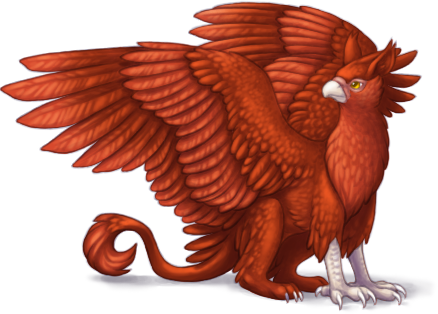 Scarlet (GGRR) |
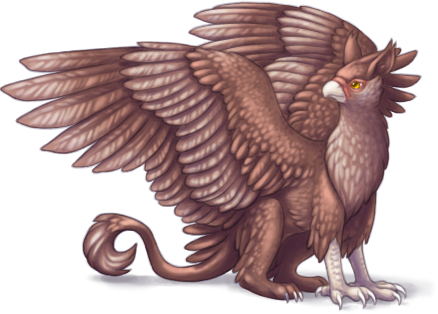 Chocolate (GgRR) |
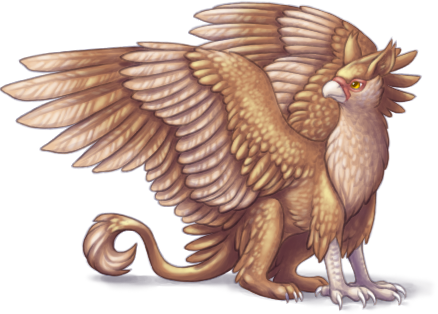 Mocha (ggRR) |
 Copper (GGRr) |
 Tan (GgRr) |
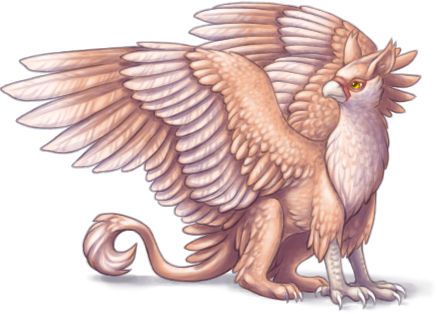 Coral (ggRr) |
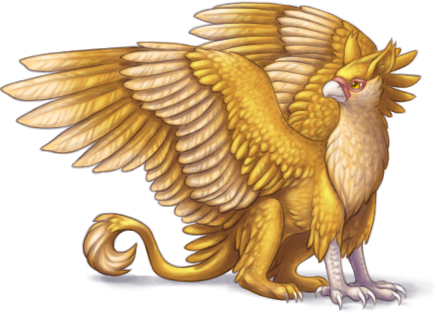 Gold (GGrr) |
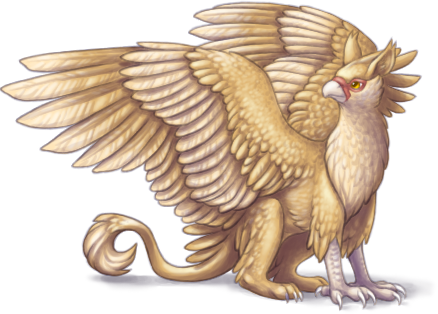 Sand (Ggrr) |
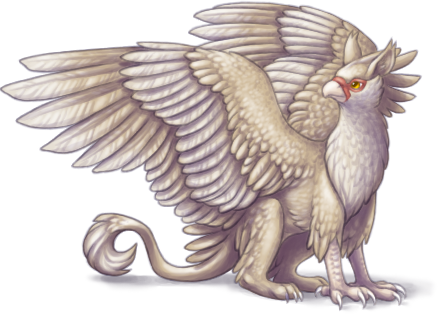 Champagne (ggrr) |
Another, different kind of dominance is co-dominance. This occurs when both alleles are equally strong.
Instead of one dominating the other, or them mixing to produce an 'intermediate' looking phenotype, both the traits will be fully expressed... alongside each other.For example, instead of being pink, a flower may have some petals purple and some white.
If a black and a white animal breed, the offspring could be grey (if incompletely dominant) or have black and white body parts (co-dominant). Co-dominance does not occur here. It's just a term that's good to know, so you can't get confused between it and incomplete dominance.
A similar-looking example, though, can sometimes be seen in the horn genes (which also affect armour, bone, claws, hooves and other parts, in some breeds).
If a certain gene is switched on, an additional set of horn colours will be expressed, alongside the base horns.
Depending on the breed, this additional area may cover the entire horns, or part of the horns, or somewhere else on the body entirely.
Regardless, it is solid and will not blend with the base horn colour, like incomplete dominance.
Your Marlik's ridges of gold armour may now be alternating gold and silver ridges.
A deer that would have pure copper horns now has onyx-coloured horn stems, fading into copper tips.
Homozygous and Heterozygous
You may have heard these terms, describing pairs of alleles. It's important to know how to label these pairs, if you're looking to breed in a strategic way.
Homozygous means the pair of alleles are the same.Looking at the Gold Colour gene for example, GG would be called 'homozygous dominant' and gg would be called 'homozygous recessive'. Gg instead would be called heterozygous. There are one of each.
That's it! Pretty easy, huh?
Homozygous pairs are often desirable, because they are guaranteed to pass down one copy of their trait.
For example, you really want a Gg baby. The easiest way is to cross GG and gg parents.
You know the first one will pass down G, and the second will pass down g. They don't have anything else to pass down!
If they breed with another Gg... their offspring could be either GG, Gg or gg!
If you're looking for a gg baby, you must choose two parents that are either gg or Gg.
If one parent is GG, the baby can't inherit that second g from anywhere.
So, take a while to plan your breedings and find suitable parents.
(Or just breed randomly and enjoy the surprises... that's fun too, I guess! Nobody said you have to take this game seriously.)
True breeding
A 'true breeding' creature, crossed with another creature like it, is guaranteed to pass down a certain trait, both in geno and pheno. This is basically the same thing as homozygosity. The word 'pure' is often used in a similar way.
For some animals, the term 'true breeding' is used more strictly; the breeders demand that all traits are homozygous, and offspring must be completely identical to the parents.
You might focus on 'nailing down' and fixing the colour of the ventral coverts, getting them homozygous, and then move onto the flights, and then the...
Some very strict Masters might reserve the term 'true' only for creatures whose entire body - all the parts - are homozygous. Not necessarily all the same colour, but all true by themselves. After creating a stable population of these 'body-trues', you could then consider the body 'done', and move onto introducing the desired markings, eye colours, elements, inborn stats...
Since true breeding relies on homozygosity, that means not all colours can be true-bred. These can: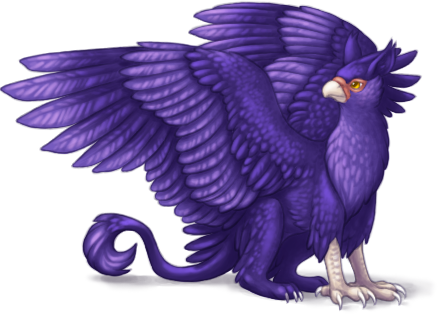 Midnight (GGRRBB) |
Scarlet (GGRRbb) |
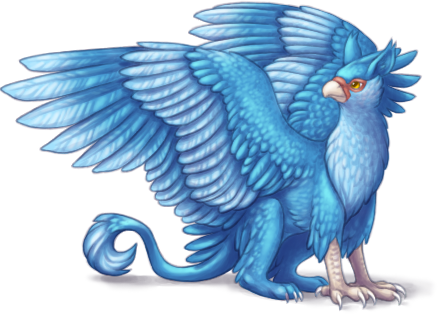 Azure (GGrrBB) |
Gold (GGrrbb) |
Mocha (ggRRbb) |
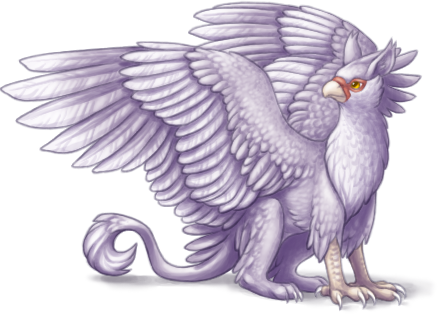 Lavender (ggRRBB) |
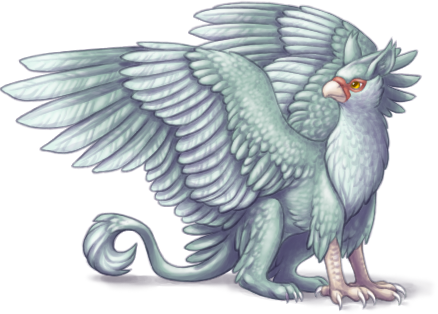 DuckEgg (ggrrBB) |
Champagne (ggrrbb) |
All other colours can be obtained, by crossing two different trues.
If you're in a hurry and would rather not wrangle with possibilities - 'I want Tan, is it worth breeding these Coppers and Irons and hoping for 1/8 chance?' - just seek out the appropriate true parents for a guarantee (in this case, you'd need Scarlet and Champagne!).
You could develop a line of Midnights with ever-increasing stats, an unrelated group of Champagnes with the desired element(s) at the time, and keep crossing them whenever you want a new, higher-standard Iron.
Other breeders could try their luck with different non-true approaches, but it would be pretty inefficient, with non-Iron offspring sometimes popping up. And if those failed offspring still have high stats, the breeders may be reluctant to sell them off. Your method would be far cleaner.